Aberdeen or Lei Yue Mun? Which Hong Kong Seafood Trip to Choose
Short answer: if you want to pick live seafood out of a tank, pay by weight and have it cooked for you a few doors away, that is Lei Yue Mun — the buy-then-cook waterfront is what the village is for. Aberdeen is a different place behind a similar name: a working wholesale fish market and a working harbour, with no retail counter and no restaurant strip. What a visitor can actually do at Aberdeen is walk the promenade boardwalk, watch fisherfolk sell the day's catch from their boats, take a sampan into the harbour and ride a ferry out to Lamma. Its floating restaurants, the reason the district is famous, are gone: the Jumbo closed in 2020, was towed out on 14 June 2022 and sank the weekend of 18-19 June 2022, and its sister vessel has not reopened.
At a glance
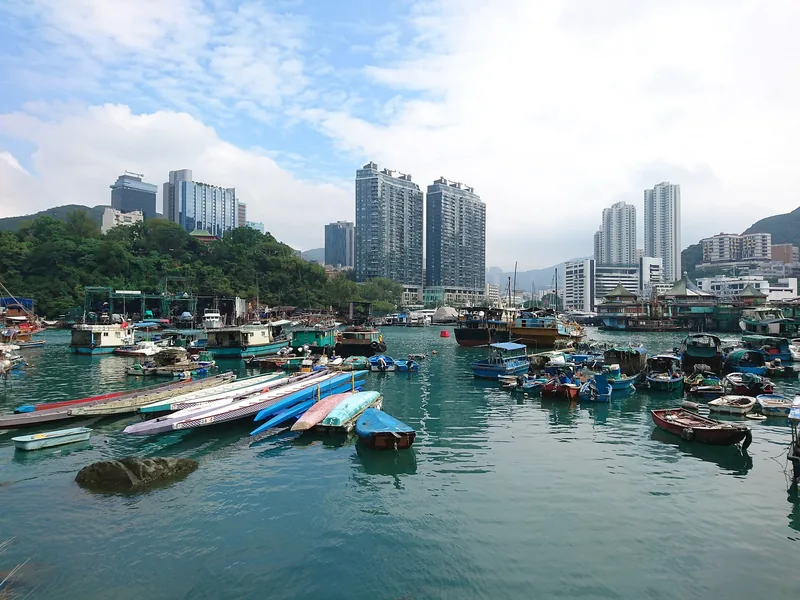
Aberdeen — Hong Kong Island, south side. A wholesale fish market built in 1950, the largest in Hong Kong, carrying more than 70 per cent of the local live seafood, and it does not sell retail. The visitor side is the promenade boardwalk, the boats, the sampans and the ferries to Lamma.
Lei Yue Mun — Kowloon, at the eastern entrance to Victoria Harbour. A working fishing village whose seafood street runs on buy-then-cook: choose from a stall tank, pay by weight, carry it to a restaurant that cooks it for a fee.
The choice — a seafood meal you assembled yourself: Lei Yue Mun. A working market and a harbour to watch: Aberdeen.
The comparison, factor by factor
| Factor | Aberdeen | Lei Yue Mun |
|---|---|---|
| What it is | A wholesale fish market and a working harbour on Hong Kong Island's south side. The market was built in 1950, and it is the largest wholesale fish market in Hong Kong | A working fishing village on the Kowloon waterfront, with a seafood street and a harbour that is still the village's front door |
| How you eat there | There is no seafood street, and the wholesale market does not sell retail. The nearest thing to the Lei Yue Mun model is a wet-market buy at Aberdeen Market, a 5-minute walk away, cooked at a restaurant upstairs — one published report, not a street of restaurants | Buy-then-cook: choose from a stall tank, pay by weight, then a nearby restaurant prepares it to your instruction for its own cooking charge |
| Selection | The largest volume in Hong Kong passes through it, but wholesale, and seen from the boardwalk rather than from a counter | Live fish and shellfish in the stall tanks, bought by weight. You look at what is swimming before you commit to anything |
| Cost per head | No per-head seafood price is published by the market, the tourism board or the trade. The only published price list on the waterfront is a boat tour, not a meal — see Costs below | No price band holds. Four dated, attributed points are set out under Costs below |
| Access | No MTR station is named Aberdeen — the South Island Line stops at Wong Chuk Hang, Lei Tung and South Horizons — so the rail approach is Wong Chuk Hang and then a bus or taxi. Ferries run from Aberdeen to Lamma | MTR Yau Tong (Kwun Tong and Tseung Kwan O lines), Exit A2, then about a 15-minute walk. Or the Sai Wan Ho ferry to Sam Ka Tsuen, about 10 minutes, HK$9 |
| Heritage and setting | A working harbour: the 1950 market, the tree-lined promenade along Praya Road, sampans and junks, and the floating-restaurant story — the Jumbo opened in 1976, closed in 2020, was towed out on 14 June 2022 and sank the weekend of 18-19 June 2022 | The village's own: a Tin Hau Temple founded around 1753 and rated a Grade 3 historic building in 2010, a lighthouse that has marked the channel since 1902, and a waterfront that still works |
| Best for | Seeing Hong Kong's seafood trade run, and being on the water — a harbour visit rather than a restaurant visit | The seafood meal itself, with the choosing and the weighing in your own hands, plus a walkable village around it |
Aberdeen: a working wholesale market, not a seafood street
Aberdeen's fish market is at 102 Shek Pai Wan Road, on Hong Kong Island's south side. It was built in 1950 and it is the largest wholesale fish market in Hong Kong: the Hong Kong Tourism Board puts more than 70 per cent of the local live seafood through it. What it is not is a place to eat. The MICHELIN Guide states plainly that the wholesale market does not sell retail, and the statutory body that runs Hong Kong's wholesale fish markets publishes a trading window of 04:00 to 14:00 and a service list — chilled fish, live seafood, clean seawater supply, local produce — rather than anything aimed at a diner.
Aberdeen Wholesale Fish Market, in figures
Address: 102 Shek Pai Wan Road, Aberdeen, Hong Kong Island
Built: 1950 — the oldest and largest wholesale fish market in Hong Kong
Share of the trade: more than 70 per cent of the local live seafood
Site area: about 15,577 square metres
Published trading window: 04:00 to 14:00
Retail sales: none — the wholesale market does not sell retail
What a visitor actually does at Aberdeen
The visitor-facing side is not the market floor but the pedestrianised promenade boardwalk in front of it, where fisherfolk sell the day's catch straight from their brightly coloured boats. The tree-lined Promenade runs eastwards along Praya Road from the wholesale market, and from it you can take a sampan to explore the harbour by water or catch a ferry to the surrounding islands.
The ferries are worth a trip on their own account. Licensed services run from Aberdeen to Lamma: Aberdeen to Pak Kok Tsuen and Yung Shue Wan, and Aberdeen to Sok Kwu Wan via Mo Tat. No fare and no timetable are published on this page — check the operator before you set out.
Can you buy seafood and have it cooked at Aberdeen?
Not on a street, the way Lei Yue Mun works. Nothing published by the market, the tourism board or the MICHELIN Guide describes an Aberdeen strip where you choose from a tank and carry the fish to a neighbouring kitchen, and the wholesale market itself does not sell retail. The nearest thing to that model is a single MICHELIN Guide report, published on 26 May 2025: buying the day's freshest catch at Aberdeen Market, a 5-minute walk away, and having it cooked at a local restaurant upstairs. That is a wet-market purchase and an upstairs kitchen, which is a different arrangement from a waterfront seafood street with dozens of houses.
What happened to the floating restaurants
The Jumbo Floating Restaurant is why most people know the name Aberdeen, and its story is over. It opened in 1976, after about four years and HK$30 million of work by Stanley Ho's group, and could seat up to 2,300 diners across three storeys styled as a Chinese imperial palace. It had already survived one disaster: on 30 October 1971, while still under construction, a fire on board and on nearby junks killed 34 people, about two weeks before the scheduled opening. It closed in 2020 with the pandemic; in May 2022 the owner announced that the vessel would leave Hong Kong before its operating licence expired, after losses of more than HK$100 million since 2013. Two tugs towed it out on 14 June 2022. The weekend of 18-19 June 2022 it capsized and sank in the South China Sea near the Paracel Islands, in water more than 1,000 metres deep. No one was injured.
Its sister vessel, Tai Pak, dates Hong Kong's first floating restaurant to 1947 — the operator's own claim. Tai Pak was transferred to another operator in 2022, and it has not reopened. The operator's site is live and sells typhoon-shelter sea tours from Tai Pak Pier on Shum Wan Pier Drive, and it states that it is actively promoting the restaurant's reopening.
Lei Yue Mun: the buy-then-cook street Aberdeen does not have
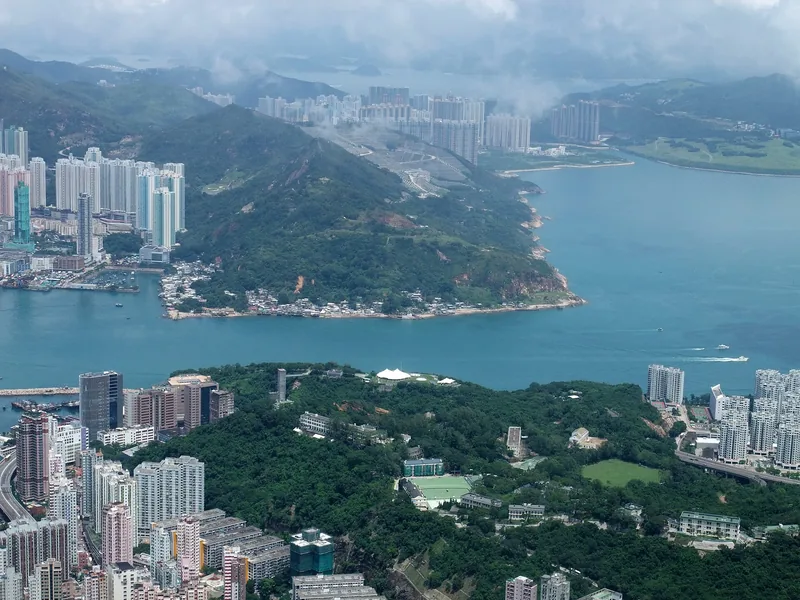
Lei Yue Mun sits on the Kowloon side at the eastern entrance to Victoria Harbour, and its seafood trade is arranged the opposite way round from a restaurant row: you buy first and eat second. You choose live seafood from a stall tank, pay by weight, and carry it to one of the nearby restaurants, which prepares it to your instruction for its own cooking charge. The government's own district guide puts the whole model in one sentence — diners buy seafood from the market stalls and bring it to the restaurants to be prepared to their preferences.
Settle the cooking charge with the house before the fish goes in. It is the part of the bill that does not sit on the tank's price tag, and it is charged separately from the seafood itself.
Getting to each
| To get there | Aberdeen | Lei Yue Mun |
|---|---|---|
| Rail | No station is named Aberdeen. The South Island Line serves Admiralty, Ocean Park, Wong Chuk Hang, Lei Tung and South Horizons, so the practical approach is to stop at Wong Chuk Hang and continue by bus or taxi | MTR Yau Tong, Exit A2 (Kwun Tong Line and Tseung Kwan O Line), then a walk of about 15 minutes along Cha Kwo Ling Road to Lei Yue Mun Path |
| Ferry | Aberdeen to Lamma: Aberdeen to Pak Kok Tsuen and Yung Shue Wan, and Aberdeen to Sok Kwu Wan via Mo Tat. Route existence only — no fare and no timetable are published here | Sai Wan Ho to Sam Ka Tsuen: about 10 minutes, adult HK$9, concession HK$4.50, daily, roughly every 30 minutes. The sailings that used to call at Lei Yue Mun Landing were discontinued on 6 July 2026 |
| Bus | Buses listed by the market's operator for the market include 7, 37B, 37X, 71, 72, 73, 78, 90B, 91, 91A, 94A, 107, 170, 973P and 970X, plus public light buses from Mong Kok, Wah Fu and Central. No fare and no journey time are published here | The seafood street is in the village, not at the station — the walk from Yau Tong is part of the visit. No MTR fare is printed here; check the current Octopus fare from your own origin |
| Timing | The market's published trading window is 04:00 to 14:00, so a visit aimed at the market itself belongs in the morning | The village is a walk-through, not a single address: arrive with daylight and an appetite rather than a timetable |
What a meal costs at each
Neither place publishes a per-head seafood band, and this page will not invent one. What follows is what can be sourced: dated, attributed points, each doing a different job.
Aberdeen: no meal price, one boat price
No per-head seafood band for Aberdeen is published by the market, the tourism board, MICHELIN's Aberdeen guide or anyone in the trade. The only published price list on the Aberdeen waterfront is for a boat tour rather than a meal. Every figure below is from the operator's own list, read in October 2026, and is quoted per group: HK$1,800 for a 30-minute typhoon-shelter tour and HK$2,600 for 60 minutes, maximum 40 people per group, with a sampan tour at HK$900 or HK$1,300 per 10 people and a food add-on at HK$60 per person. Group bookings only.
The market's own canteen looks like the cheap option, and this page does not send you to it: the tourism board's two listings give it two different names at the same address, and the hours published for it do not agree with each other.
Lei Yue Mun: dated points instead of a band
Lei Yue Mun's numbers are better in kind, not in tidiness. Every point below is attributed and dated, and none of them is a market band.
- HK$498 per head — an eight-course seafood set at Ming Kee Seafood on Hoi Pong Road, price including the seafood cooking fee, tea and condiments and 10 per cent service. An OpenRice booking-listing price with a use window of 1 February to 31 May 2026.
- HK$198 and HK$488 per head — booking-platform promotional set menus at Wai Lung: a six-course set for two at HK$198 per head against a listed HK$396, and a ten-course set for six at HK$488 per head against a listed HK$976. Promotional, and the package excludes tea, condiments and drinks. The higher pair is corroborated by OpenRice's booking listing for the same house.
- About HK$350 per head — a diner's report of a nine-person set including seafood and the cooking fee at Happy Seafood, review posted June 2023.
- About HK$500 per head — a diner's report of an eight-to-twelve-person set at Wai Lung with tea and condiments included and no service charge, visit July 2024.
All four listings were read in October 2026. Read the two ends of that list and you have the reason there is no band on this page: the same short waterfront produced a HK$498 all-in set and a HK$198 promotional set menu in the same season, because the bill follows what you take out of the tank.
Choose Aberdeen, or choose Lei Yue Mun
Choose Aberdeen if…
You want to see the trade rather than eat in it: the wholesale market in the morning, the promenade boardwalk with fish sold straight off the boats, a sampan into the harbour, and a ferry across to Lamma. It also makes sense if you are already on Hong Kong Island's south side, and if the floating-restaurant history is what draws you, the setting and the story are both still there — the restaurants are not.
Choose Lei Yue Mun if…
You want the meal to be yours: you choose the fish out of the tank, agree the weight and the price, and decide how it comes back to the table. It is the seafood experience a normal restaurant cannot give you, it is about a 15-minute walk from an MTR station, and it comes with a village you can walk — a Tin Hau Temple founded around 1753, the channel, and a lighthouse that has marked it since 1902.
Choose neither if…
What you actually want is a conventional, menu-led seafood restaurant. Aberdeen does not offer that either, and Lei Yue Mun's signature is exactly the market-to-table sequence you would be opting out of.
Can you do both in one trip?
Treat them as two outings. Aberdeen is on the south side of Hong Kong Island; Lei Yue Mun is at the eastern entrance to the harbour on the Kowloon side; and because there is no MTR station named Aberdeen, the rail approach to Aberdeen is Wong Chuk Hang plus a bus or taxi. Neither is a stop you pass on the way to the other.
What this page does not print
Numbers that circulate for these two places are left out here when no source supports them. Not printed: any Aberdeen per-head seafood band; any per-person sampan fare; any Aberdeen bus fare or journey time; fares or timetables for the Aberdeen-Lamma ferries; any cooking-fee rate for Lei Yue Mun; the single day the Jumbo sank; and anything about the state of the sunken vessel today.
Related guides
Lei Yue Mun vs Sai Kung vs Sam Ka Tsuen — the three-way Hong Kong seafood comparison
Lei Yue Mun seafood restaurants — three ways to eat, what to order and what you will pay
The seafood market — the stalls, the tanks and how buying by weight works
Getting here — MTR, ferry, bus and taxi routes to the village
Stanley Market vs Lei Yue Mun — another Hong Kong seafood comparison
Man Mo Temple vs Tin Hau Temple — the temple question, if you are adding the village's Tin Hau Temple to your day